Pirates, Gold, and a 300-Year-Old Mystery — Solved by Science
Pirates, Gold, and a 300-Year-Old Mystery — Solved by Science
When the pirate ship Whydah Gally sank off Cape Cod on April 26, 1717, it took its secrets to the bottom of the ocean. Now, more than 300 years later, the gold artifacts recovered from the wreck are rewriting history.
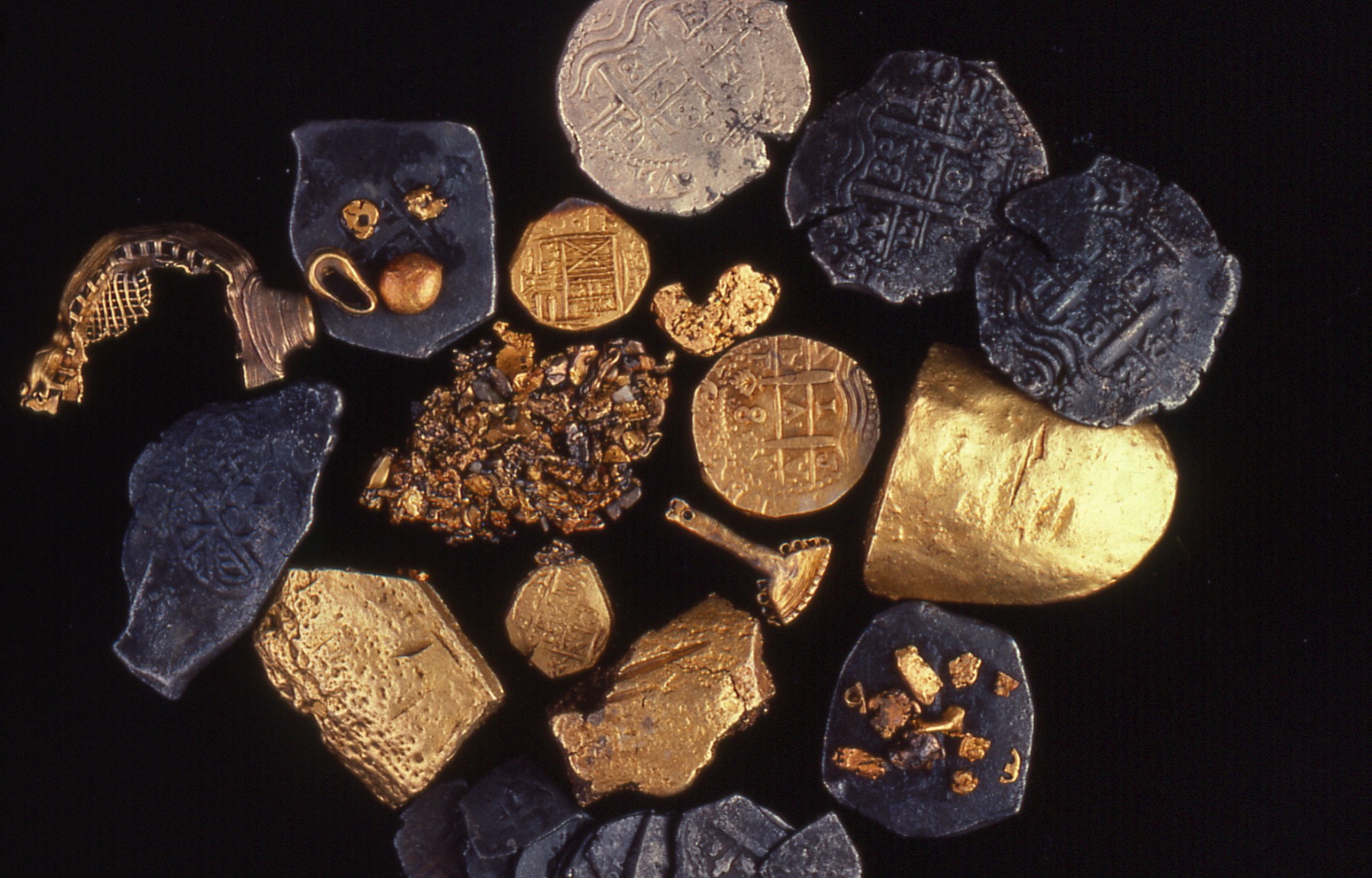
For centuries, European traders claimed that Akan merchants in West Africa routinely sold fake or heavily diluted gold. These accounts, repeated by writers from the 1600s through the 1800s, painted a picture of widespread fraud on the Gold Coast. But a new scientific study of Akan gold artifacts from the Whydah tells a very different story.
Researchers analyzed over 70 gold pieces from the wreck using two sophisticated instruments — portable X-ray fluorescence (pXRF) and Scanning Electron Microscopy (SEM-EDS). Their conclusion? The gold was largely legitimate. The high silver content that European traders complained about turns out to reflect how West African gold naturally occurs geologically in Ghana’s Ashanti Gold Belt — not deliberate adulteration. Small traces of copper in cast pieces likely came from ordinary goldsmithing practices, not an attempt to deceive buyers.
In short, the centuries-old accusations against Akan traders appear to have been exaggerated, biased, and largely based on speculation rather than evidence — and the Whydah’s gold provides the first scientific data to prove it.
The Whydah collection is uniquely valuable to this research. It represents the largest and most precisely dated assemblage of Akan gold artifacts in the world — a rare scientific window into early 18th-century West African trade.
About the Research
Pirate gold provides new insights into West African trade using pXRF and SEM EDS analysis
Tobias B. Skowronek, Brandon Clifford & Christopher R. DeCorse
npj Heritage Science, Volume 14, Article 169 (2026) — Open Access, Published March 23, 2026
Read the full study
Come see these remarkable artifacts for yourself at the Whydah Pirate Museum.